.png)
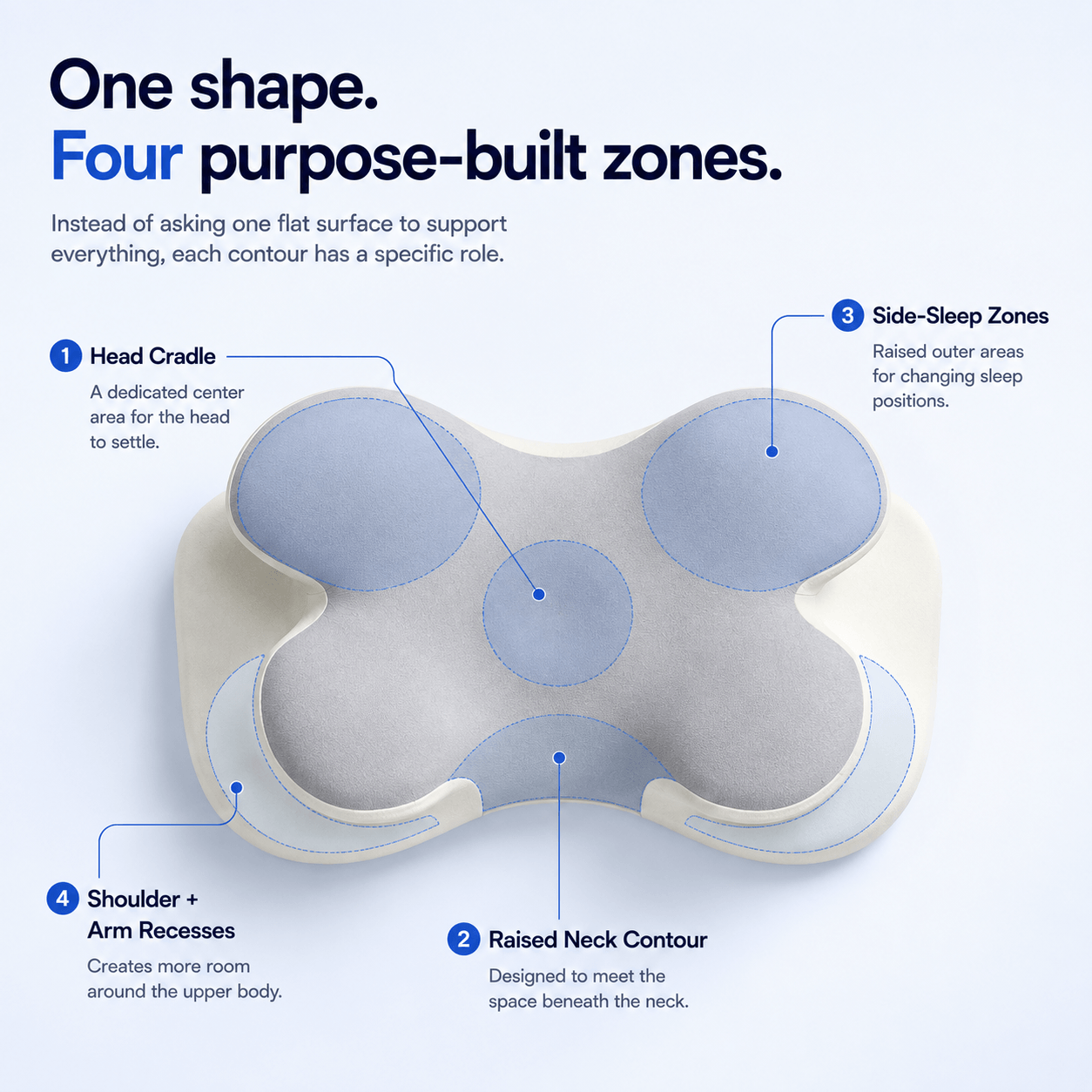
1. Head Cradle
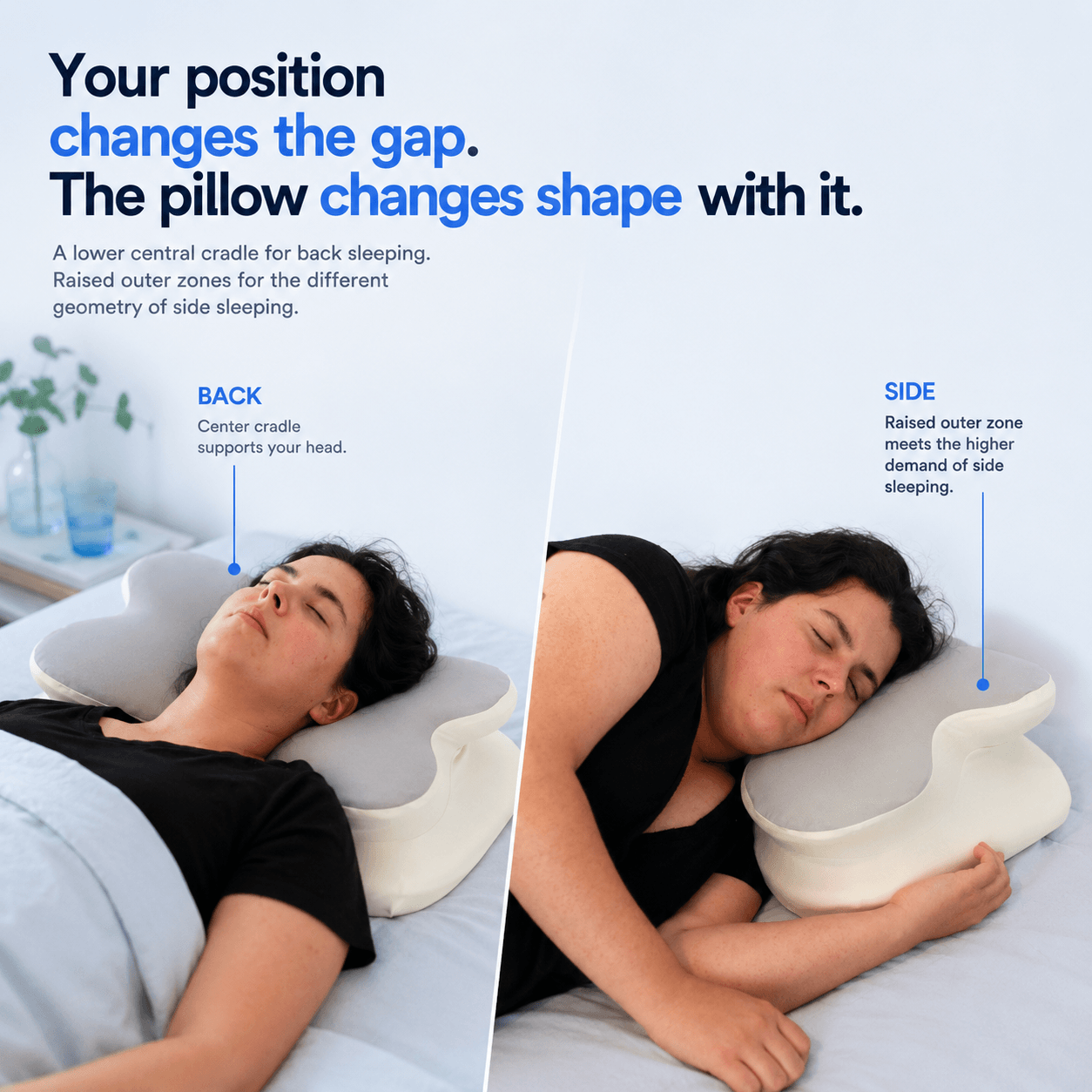
A dedicated central resting area gives the head its own place to settle.


“I’ve bought enough pillows to know that five minutes in bed doesn’t tell you much. What stood out to me was waking up and realizing I hadn’t spent the night stacking, flipping, and fixing it.”
99-Day Comfort Guarantee
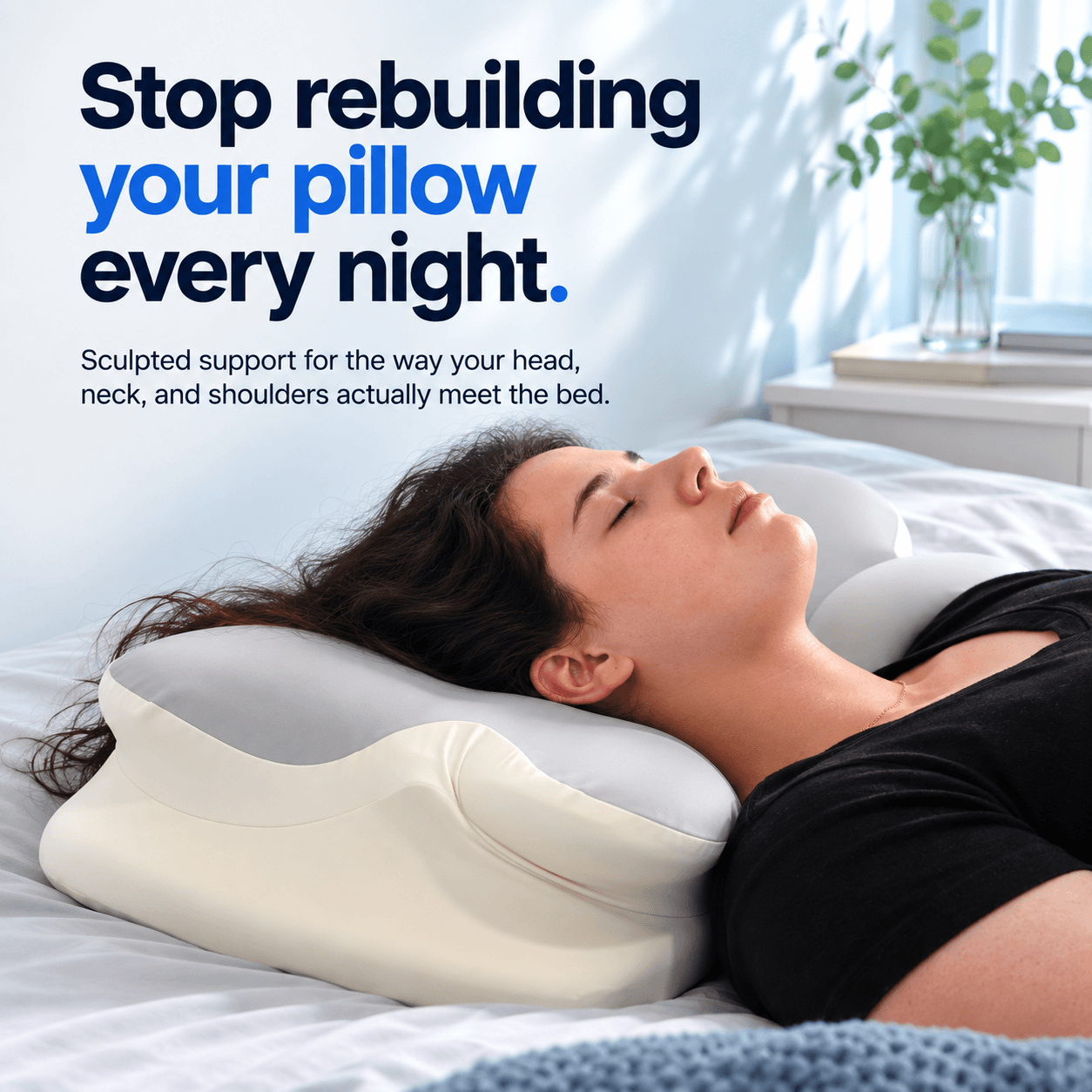
You lie down. The pillow feels too low, so you bunch the edge underneath your neck. Better.
Then your shoulder or side starts asking for something different.
So you adjust. Fluff it. Slide an arm underneath. Add another pillow. Take the second pillow away.
The setup keeps changing because your sleep position keeps changing.
Your neck still has to meet the pillow — and that gap changes when your position changes.
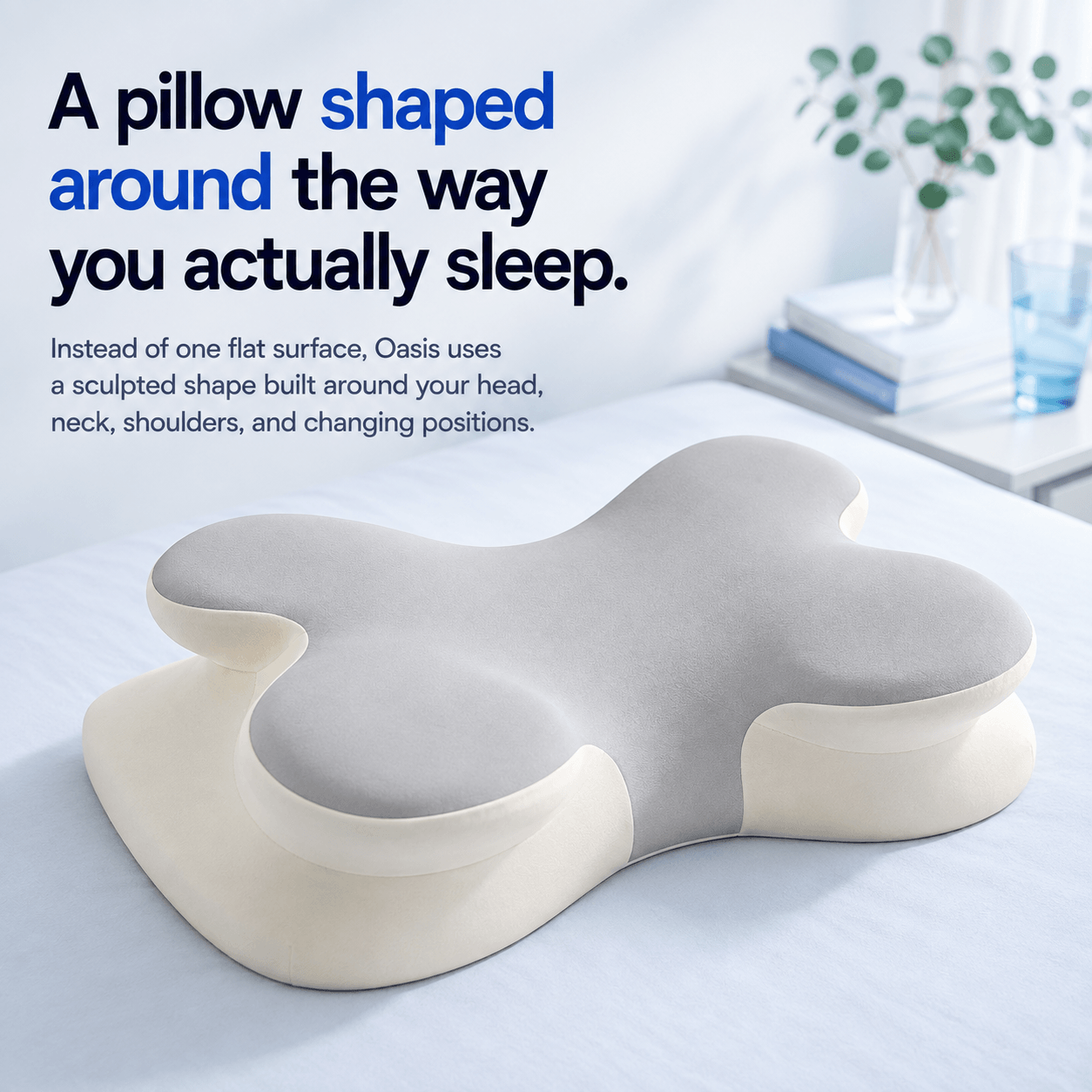
Instead of asking one flat surface to do every job, Oasis uses shape to give different parts of the pillow different places to settle.
A dedicated central resting area gives the head its own place to settle.
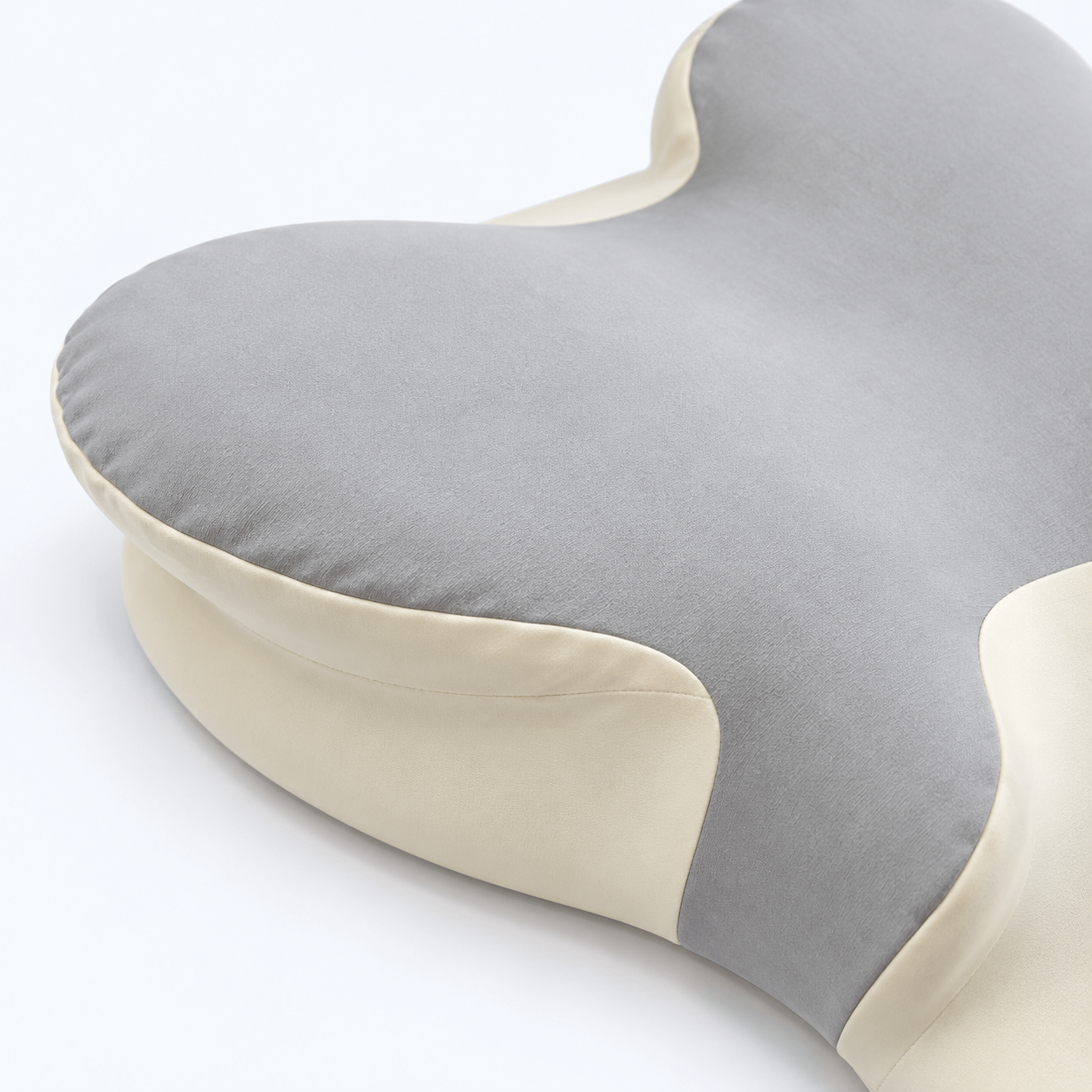
The curved contour comes up toward the neck instead of leaving the entire surface flat.
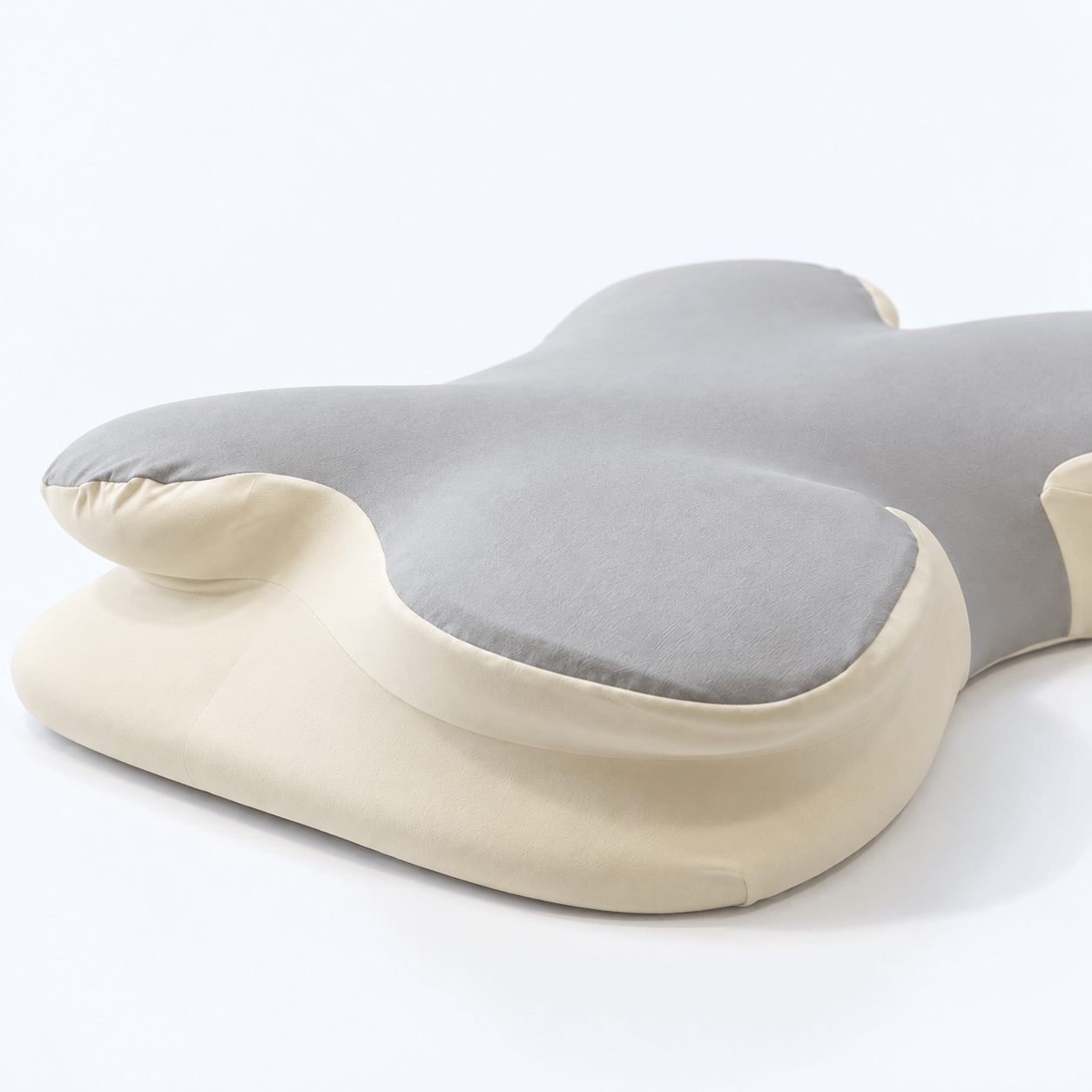
Raised outer areas give the head somewhere different to settle when you roll onto your side.
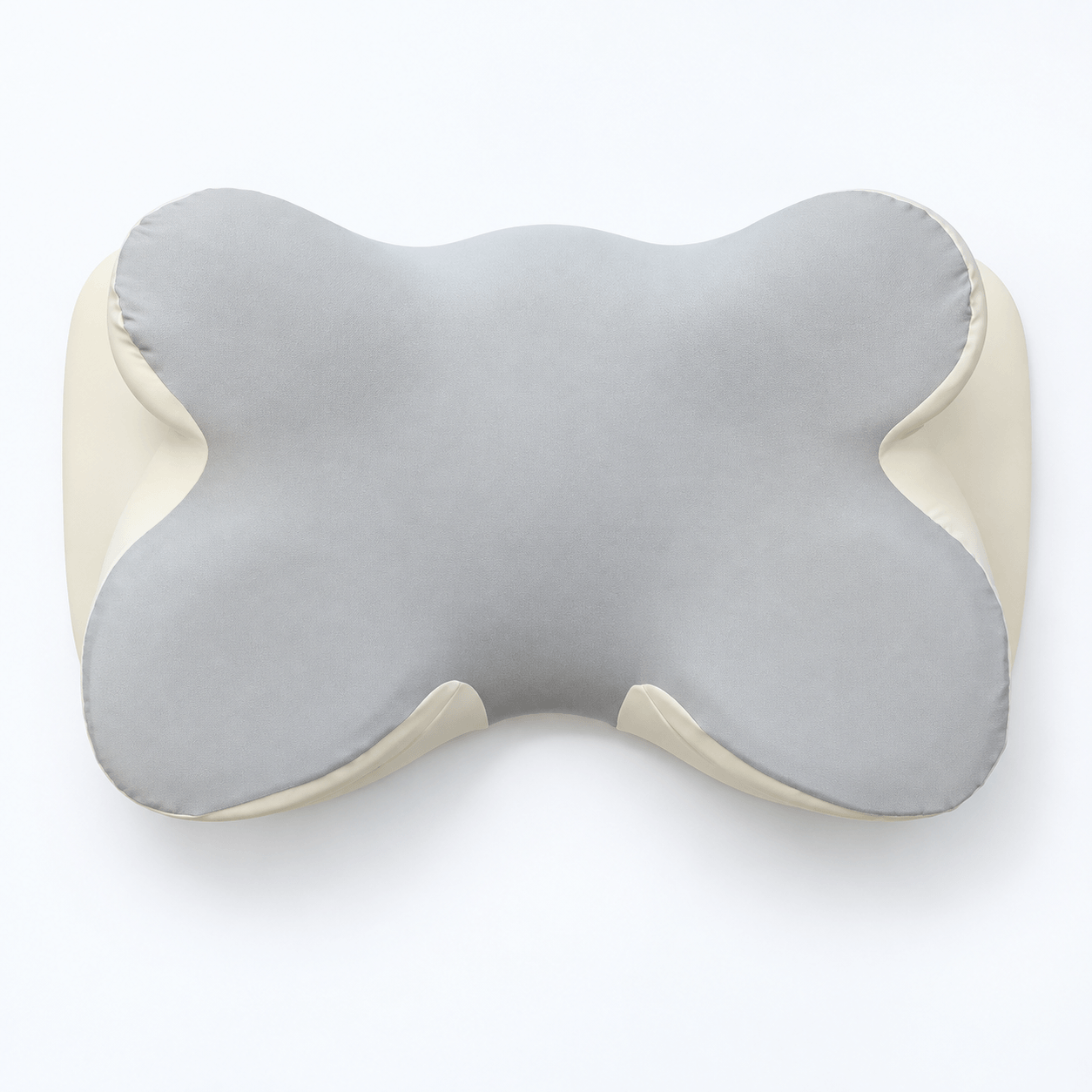
Outer contours create space around the shoulder and arm area as your position changes.
The contour should meet you. It should not force you.
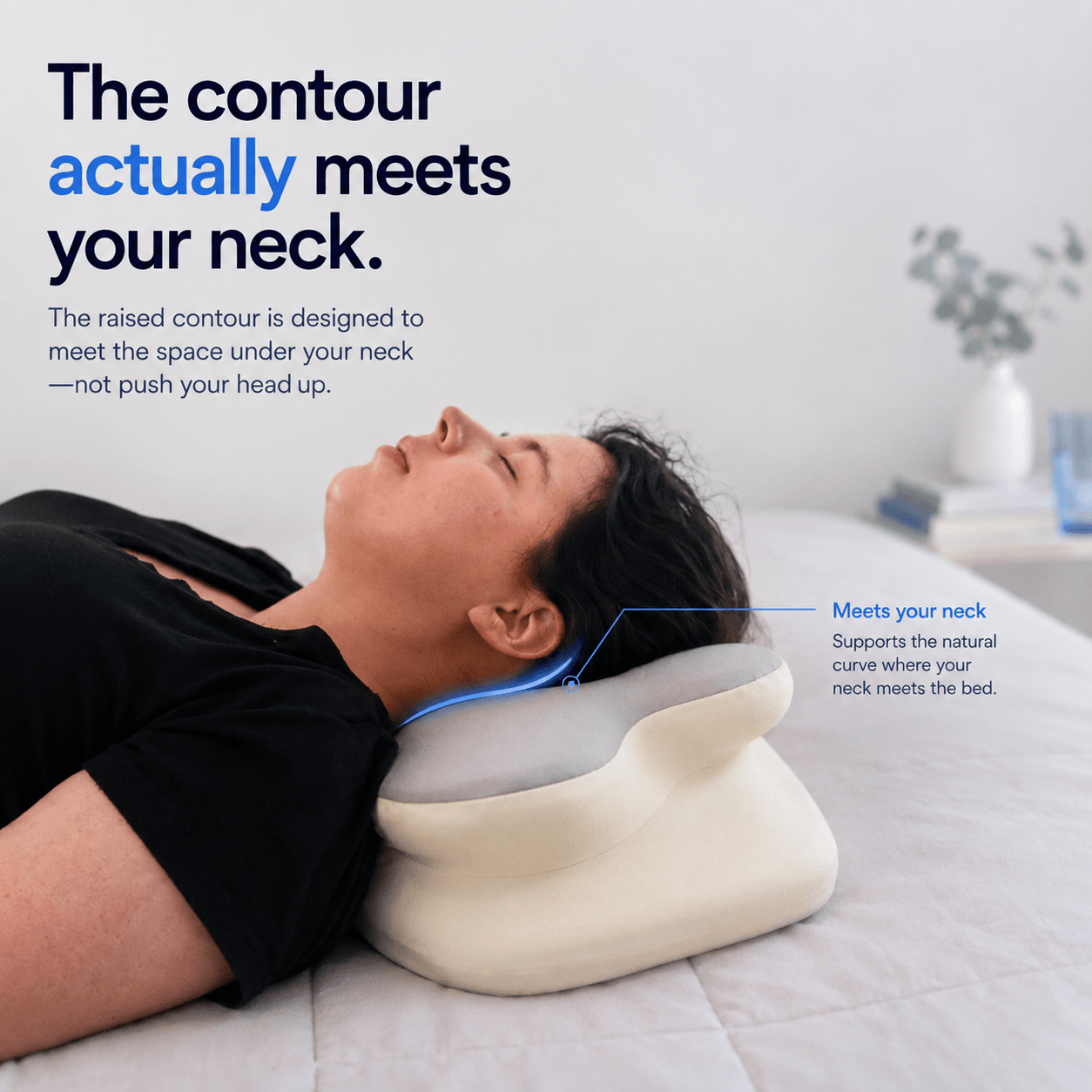
The Neck-Cradle Support System should make sense when a real head, neck, and shoulder actually meet it — not just when the pillow is sitting by itself.
.png)
The raised neck area is evaluated against the space beneath the neck while the head rests in the center of the pillow.
The useful question is simple: does the contour actually reach the place a flatter surface can leave you trying to fill yourself?
“Does the contour actually meet my neck?”
A physical fit demonstration — not a medical test or spinal-alignment claim.
.png)
Your shoulder changes the space between your head and the mattress when you roll onto your side.
This shows how the sleeper interacts with different areas of the pillow as the position changes.
“Does the support still make sense when I change position?”
.png)
Foam changes shape under pressure. What matters here is what happens after that pressure is removed.
The sculpted area is compressed, released, and observed as it returns toward its original contour.
“Does the shape come back after pressure?”
Fit, contact, foam response, firmness, heat retention, and other product details should be demonstrated or measured — not dressed up with vague adjectives.
.png)
Not because it traps you in one “perfect” position.
Because the shape gives your head, neck, shoulder, and side-sleep positions somewhere intentional to go.
So the night becomes less about managing the pillow — and more about leaving it alone.
Maybe you’ve already tried memory foam, contour pillows, different lofts, stacking, flipping, and changing positions.
Oasis still has to fit the way you actually sleep. The point is not to trust another “ergonomic” label — it is to judge whether the shape works with your body, mattress, and positions.
Neck length, shoulder width, head shape, and preferred loft affect where a contour actually meets you.
A softer mattress lets the shoulder sink farther, while a firmer surface can leave it sitting higher.
Back and side sleeping place the head, neck, and shoulder against the pillow differently.
The better evaluation is the one you stop fixing. Then compare.
Almost any pillow can feel promising for five minutes.
The more useful question is what happened after you rolled, shifted, settled, and slept.
Don’t force the first side to work. Flip the pillow and compare how the contour meets you.
Notice whether you are still folding, stacking, flipping, or putting an arm underneath when your position changes.
Was the pillow still demanding your attention — or did you spend more of the night leaving it alone?
Outer: 87% nylon / 13% spandex
Inner lining: 100% polyester fiber
The care label lists washing the outer cover up to 40°C.
Do not bleach · low-temperature tumble dry · do not iron · do not dry clean · foam core should not be water washed.
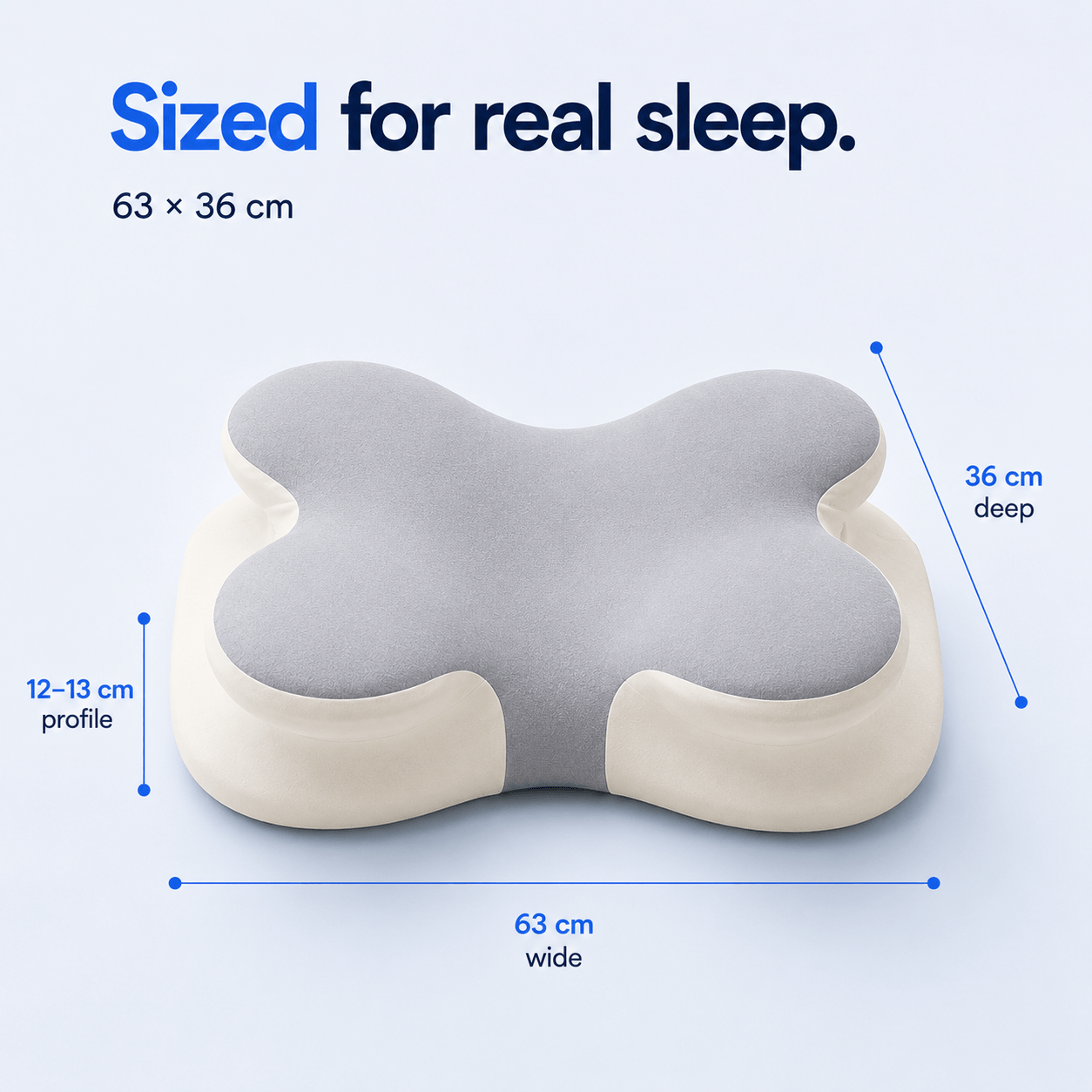
Overall size: 63 × 36 cm
Profile: 12 / 13 cm
Measurements are approximate.
.png)
Try both orientations. Sleep on your back. Roll onto your side.
Pay attention to how often you still feel the urge to fold, stack, flip, or put your arm underneath it.
You have 99 days to decide whether Oasis earns a permanent place on your bed.
Same Oasis pillow. Choose the setup that makes sense for your bed — or your household.
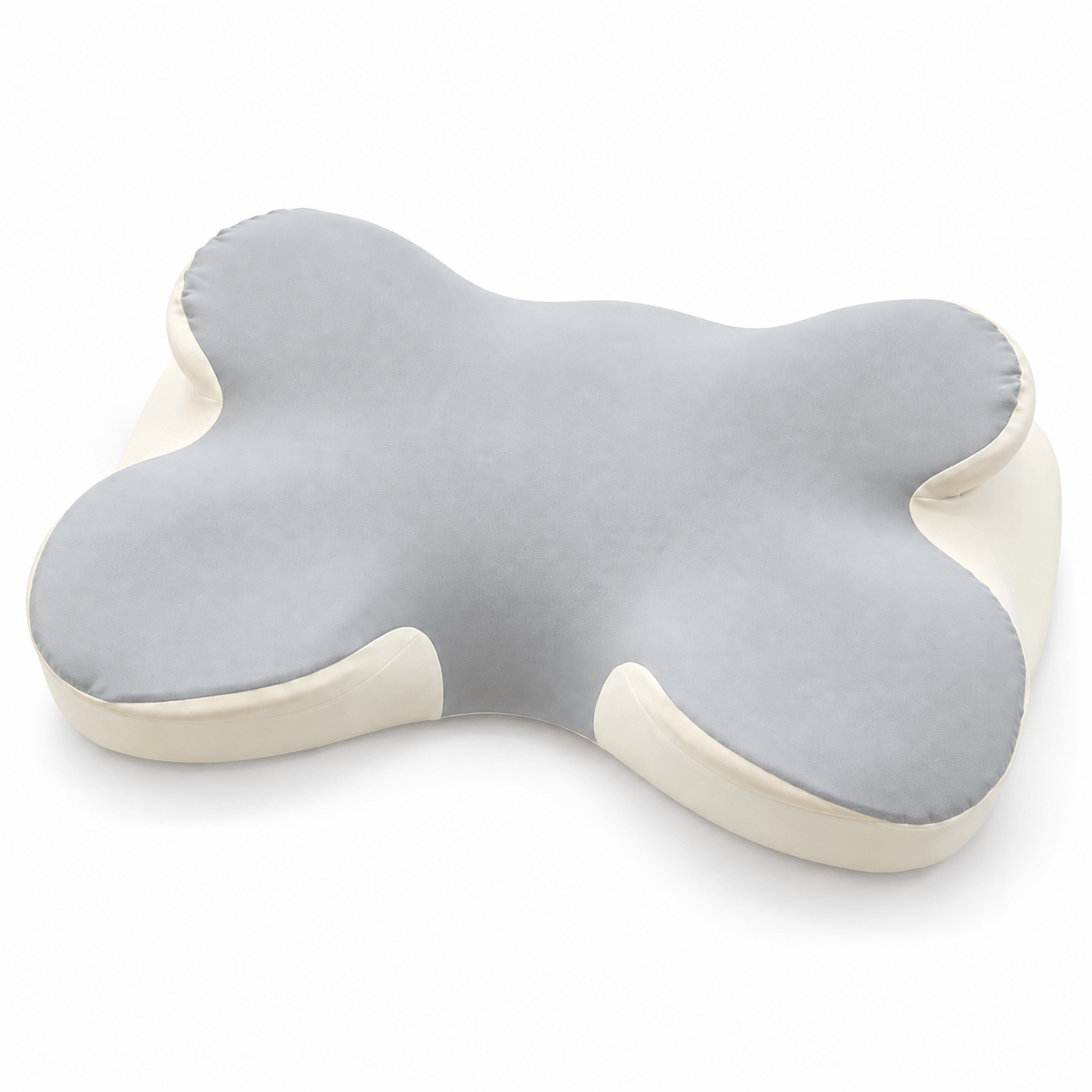
$69.99 per pillow
.png)
$55 each · 21% less per pillow
Save $29.99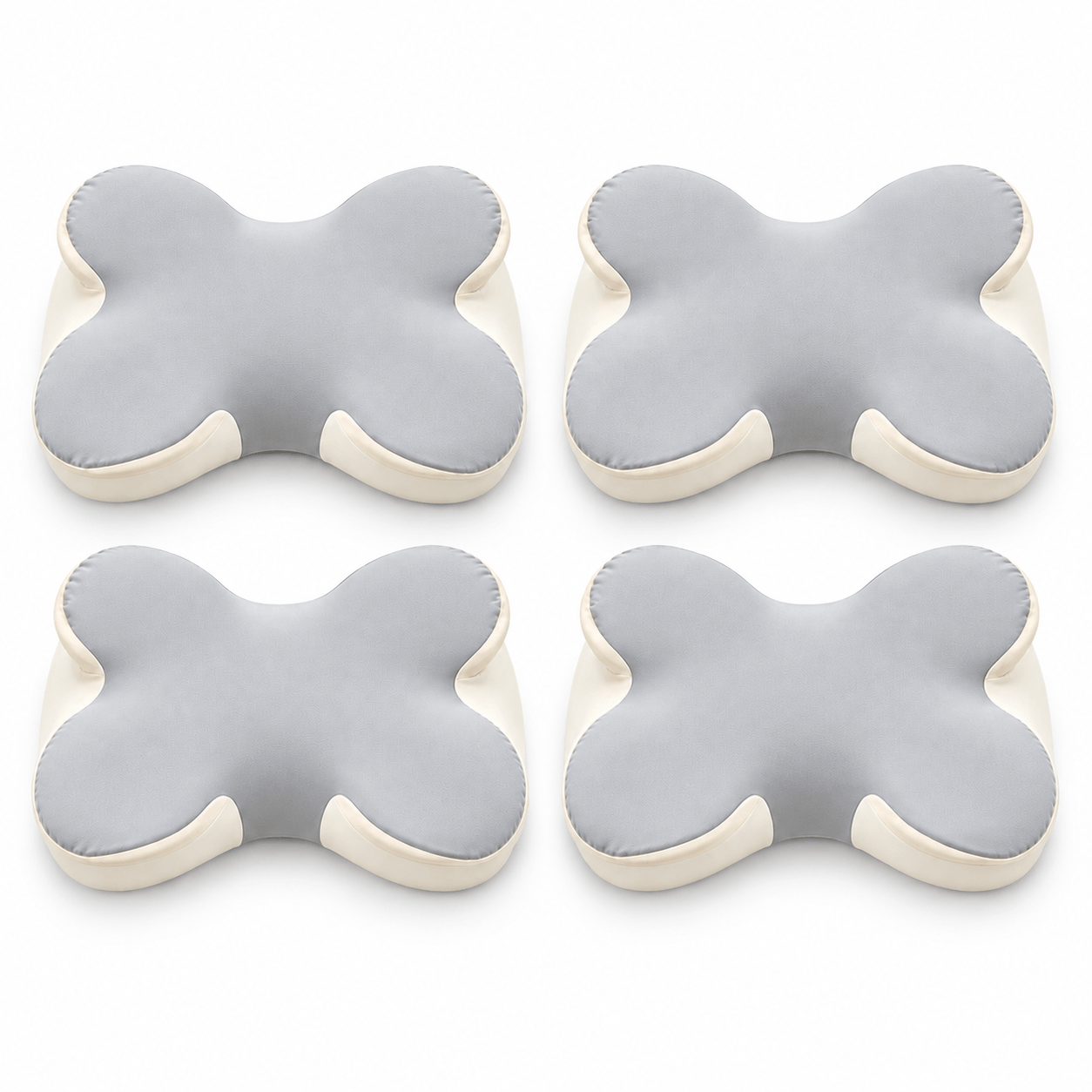
$50 each · 29% less per pillow
Save $79.97Oasis uses the Neck-Cradle Support System: a central area for the head, a raised neck contour, raised outer side-sleep zones, and outer contours that leave room around the shoulder and arm.
The current dimensions are 63 × 36 cm with a 12 / 13 cm profile.
Standard pillowcase fit should be confirmed against the final production sample before relying on it.
Try both. Compare where the contour meets your neck and whether either orientation makes you feel pushed up or leaves you wanting to bunch more material underneath.
The better orientation is the one you feel less compelled to fix.
The pillow includes a central head area, raised neck contour, and raised outer zones intended to accommodate the different geometry of back and side positions.
Actual fit still depends on your body, mattress, and preferred position.
Turn the pillow around and compare the opposite orientation. If neither side meets your neck comfortably after a fair trial, Oasis may simply not be the right fit for your body or mattress.
No. Oasis is a comfort pillow designed to support the head while the raised contour meets the underside of the neck.
It is not a medical device and is not intended to diagnose, treat, or medically correct spinal or cervical conditions.
We are not publishing a specific firmness rating until the final sample is physically verified. The page instead shows the pillow’s shape and compression behavior directly.
Watch the Rebound Test above: press the sculpted foam down, let go, and see it return toward its original contour.
We have not established a verified cooling or heat-retention claim, so Oasis is not presented here as a cooling pillow.
The removable outer cover can be washed up to 40°C
Do not bleach. Low-temperature tumble dry. Do not iron. Do not dry clean. The memory-foam core should not be water washed.
Try both orientations and give yourself enough real nights to judge the fit fairly. Pay attention to how often you still feel compelled to fold, stack, flip, or rebuild the setup.
.png)
One pillow too flat. Two too high. The edge folded under your neck. Your arm underneath.
Oasis is shaped to give your head a place to settle while bringing the pillow up into the space beneath your neck — so you can spend less of the night managing your setup.